💧 The Truth About Alkaline vs. Alkalized Water And Why Kangen Water Is in a League of Its Own
- KJ
- Dec 17
- 4 min read
Updated: 2 days ago
At Kangen Water Station, we often meet families who say:
“Most alkaline water systems today already come with good filters, right?”
That’s an excellent and very thoughtful question 💧And the answer is: yes, many modern alkaline water systems do include decent filtration, often carbon-based, ceramic, or mineral-stage filters.
So the real difference between Kangen Water and other alkaline systems is not just the filter.
The deeper difference lies in how alkalinity is achieved and whether the water is truly alkaline or genuinely alkalized.
This distinction is subtle — but once you understand it, it changes how you see water forever.
Let’s explore it clearly, step by step.

1️⃣ What Does “Alkaline” Actually Mean?
In basic chemistry, alkaline simply means water with a pH above 7.0.
So technically:
Water at pH 8 or 9 is considered “alkaline”
Many systems can achieve this number
However, there are two very different ways water becomes alkaline.
1. Chemically Alkaline Water (Adjusted pH)
This is the method used by many alkaline filters and systems.
Minerals or compounds (such as calcium, magnesium, or bicarbonates) are added to the water
The pH increases
Filtration may be good
But the molecular structure and electrical energy of the water remain unchanged
The result:Water that is alkaline by measurement, but still chemically static.
2. Electrically Alkalized Water ( True Ionization )
This is how Kangen Water® is created.
Water is electrolyzed, not chemically altered
Acidic and alkaline streams are separated naturally
The alkaline water contains:
Active molecular hydrogen (H₂)
Negative ORP (antioxidant potential)
Micro-clustered structure
This process does more than raise pH.It changes the redox state and energy of the water itself.
That’s the key difference between being alkaline and being alkalized.
2️⃣ Being Alkaline vs. Becoming Alkalized
Imagine two glasses of water.Both read pH 9.0 on a meter.
Glass A: Alkaline filter water (chemically alkaline)
Glass B: Kangen Water (electrically alkalized)
Even with the same pH, the two waters behave very differently because their internal structure and energy are not the same.
Property | Chemically Alkaline Water | Kangen Water (Alkalized) |
How pH is raised | Mineral addition | Electrolysis |
ORP (redox value) | Positive (oxidizing) | Strongly negative (reducing) |
Molecular hydrogen (H₂) | None | Freshly generated |
Electron activity | Static | Active electron donor |
Stability | Temporary | Fresh at point of use |
Hydration feel | Heavy | Smooth, light |
So while the number may look the same, the function and vitality are worlds apart.
3️⃣ “Alkaline” vs. “Alkalizing” — What the Body Responds To
This is a crucial concept.
Alkaline describes what something is
Alkalizing describes what it does in the body
For example:
Lemon is acidic outside the body, yet alkalizing after metabolism
Chemically alkaline water may stay alkaline, but not necessarily alkalize the body
True alkalizing support comes from:
Negative ORP
Active hydrogen
Balanced electrical charge
That’s why water that is simply alkaline is not the same as water that is biologically alkalizing.
4️⃣ ORP — The Missing Variable in Most Alkaline Systems
pH tells you acid vs alkaline.ORP tells you whether water gives or steals energy.
Positive ORP: Oxidizing (electron-stealing)
Negative ORP: Reducing (electron-donating)
Most alkaline systems raise pH but leave ORP positive or neutral.
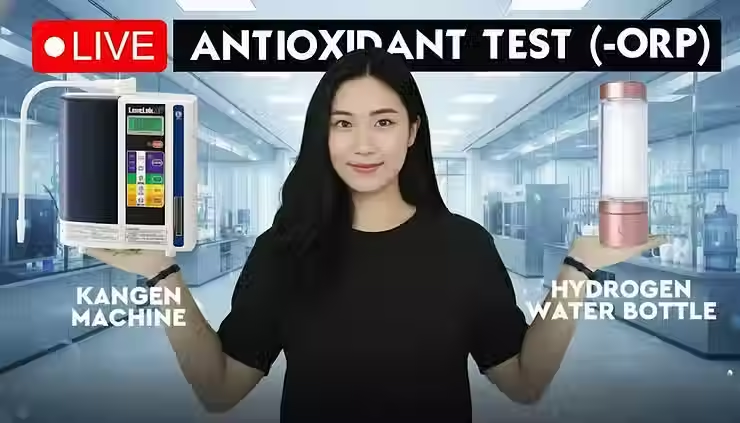
Kangen Water naturally produces strong negative ORP, often between −300 to −800 mV, indicating real antioxidant potential.
This electrical vitality is what many people feel as:
Easier hydration
Lighter digestion
Smoother taste
5️⃣ Why Alkaline Systems With Good Filters Still Fall Short
Good filtration is important — and we acknowledge that many systems do this well.
But filtration alone only:
Removes impurities
Improves taste
It does not:
Generate molecular hydrogen
Create negative ORP
Restructure water clusters
Energize the water
Process | Typical Alkaline System | Kangen Water System |
Filtration | Yes | Yes |
pH adjustment | Mineral-based | Electrolysis |
Hydrogen (H₂) | Minimal | Abundant |
ORP | Positive | Strongly negative |
Bioavailability | Limited | High |
Transformation | Partial | Complete |
Both may filter — but only Kangen Water filters and transforms.
6️⃣ The Reminder: Water Is Not Just Chemistry
Water is information and energy.
Ionized, alkalized water carries a measurable electrical signature that:
Supports the body’s natural buffering systems
Encourages cellular hydration
Feels smoother and more “alive”
That’s why people don’t just understand Kangen Water — they experience it.
7️⃣ In Simple Terms
Alkaline ≠ AlkalizedFiltered ≠ EnergizedpH ≠ True Balance
Feature | Alkaline Water Systems | Kangen Water |
Main goal | Raise pH | Restore balance |
ORP | Positive | Negative |
Hydrogen | Low | High |
Water structure | Large clusters | Micro-clustered |
Effect | Chemical | Biological |
Taste & feel | Heavy | Smooth |
8️⃣ Why This Matters for True Health
The body is not trying to “be alkaline.”It’s trying to stay balanced.
Kangen Water supports that balance by:
Providing hydrogen-rich hydration
Encouraging better daily water habits
Reducing plastic and chemical reliance
Supporting a sustainable family lifestyle
This is what we mean by True Health —physical health, financial health, and peace of mind.
❤️ Experience the Difference
If you’ve used alkaline water systems before, you’ve seen part of the picture.Now we invite you to experience the whole.
Try the water
Join a short demo (Zoom or in person)
Explore ownership plans that fit your home
We don’t just sell a machine.We help families own their water, own their health, and own their future.When you understand the difference between alkaline and alkalized,you’ll never look at water the same way again.


Comments